Every entry gives its source, check date and what the photograph actually shows. We do not assign a dish to a city when the source describes a wider tradition.
The twelve recipes are independent and contain no sponsored links. The separate “Services for your city” area may include affiliate links, which are identified.
City
Course
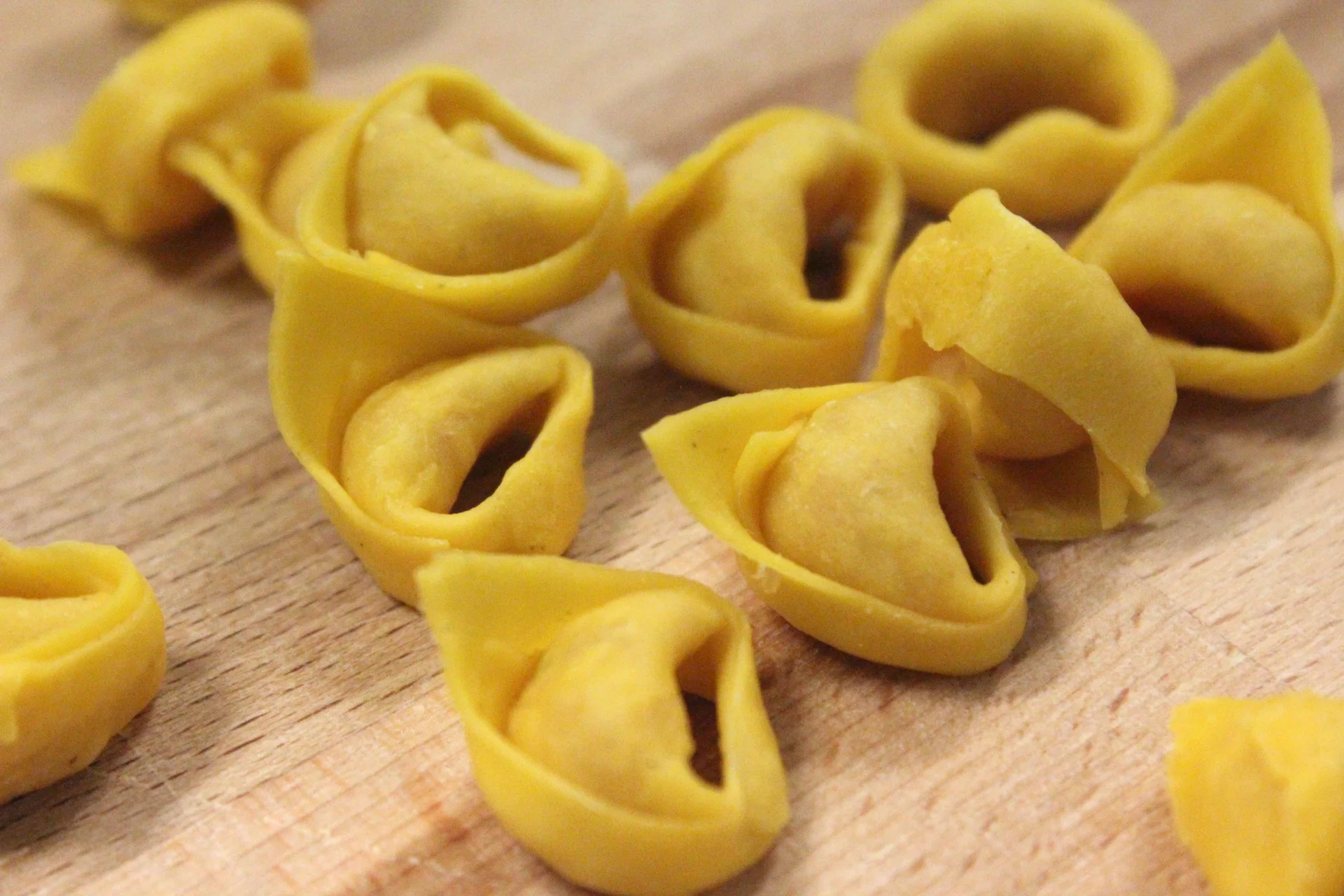
Freshly shaped tortellini; the photograph does not show them served in broth. Photo: Angelo.Muratore · CC BY-SA 4.0 · WebP version resized from the original; display may crop the image.
Bologna · First course
Tortellini in broth
Filled pasta, egg dough and broth: a preparation that calls for time, precision and clearly identified ingredients.
History and curiosities
Bologna Welcome notes that the Tortellini di Bologna recipe was formalised by the Dotta Confraternita del Tortellino in 2008 and deposited with the Bologna Chamber of Commerce.
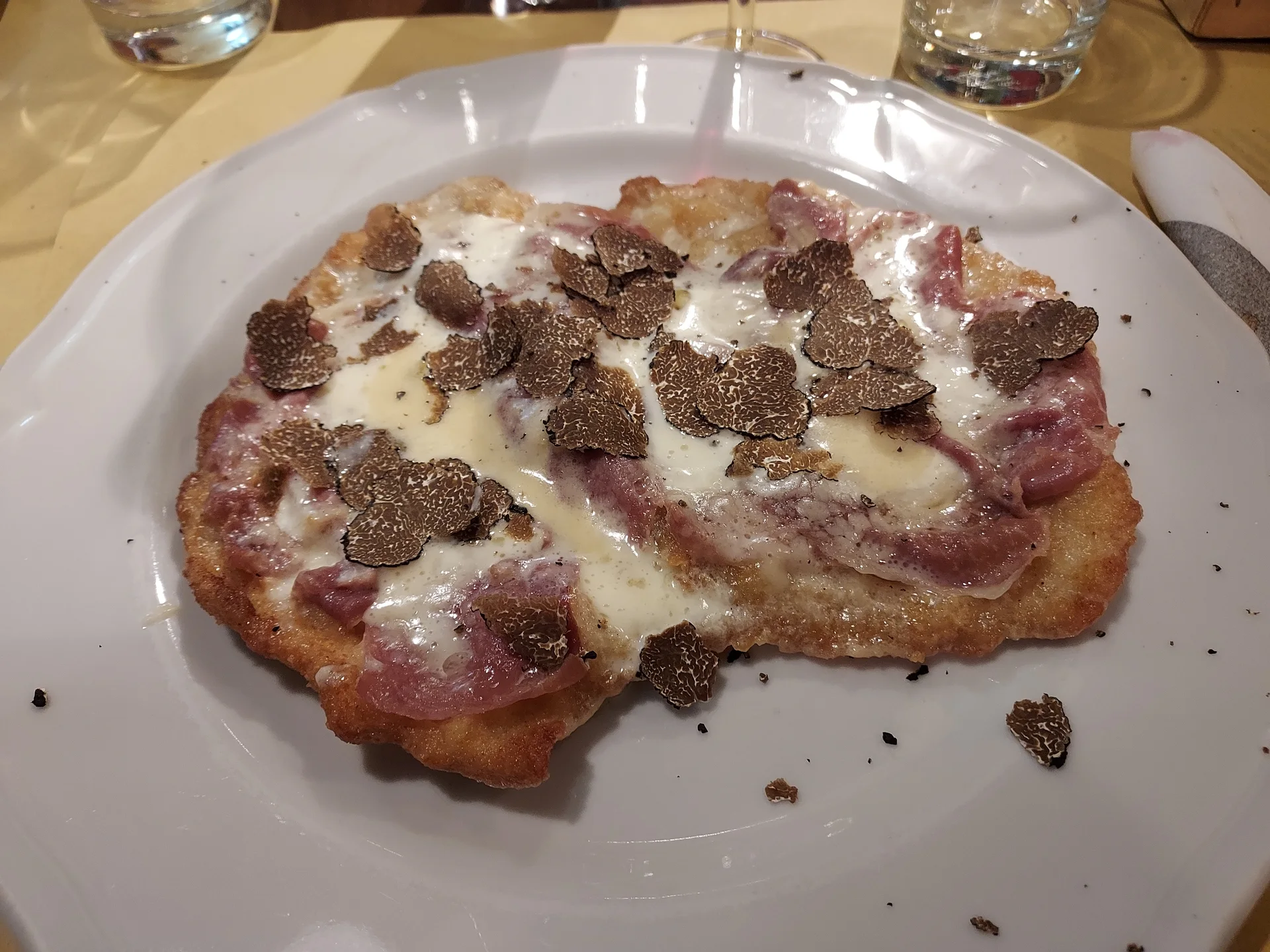
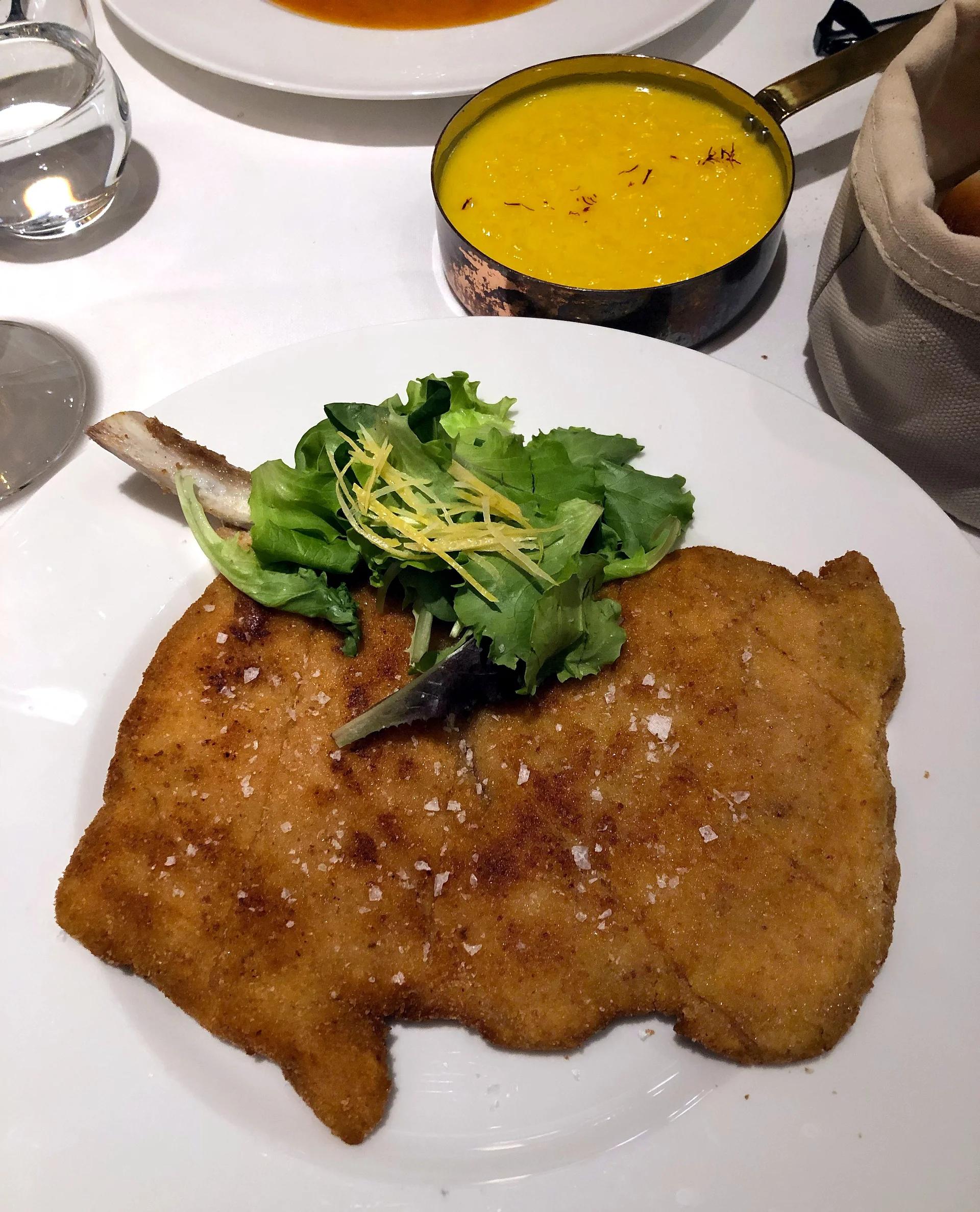
A version with black truffle; it is not presented as the only way to prepare the dish. Photo: WILO-MA · CC0 1.0 · WebP version resized from the original; display may crop the image.
Bologna · Main course
Bolognese-style cutlet
Breaded veal, prosciutto and Parmigiano: a city recipe distinct from Milanese cutlet.
History and curiosities
The recipe published by Bologna Welcome was deposited by the Italian Academy of Cuisine with the Bologna Chamber of Commerce in 2004.
Essential ingredients
Veal, eggs, flour and breadcrumbs
Prosciutto and Parmigiano
Butter, a little broth and meat jus; lemon, salt and pepper
Method at a glance
Flatten the veal, then coat it in flour, seasoned egg and breadcrumbs.
Brown in butter on both sides.
Top with prosciutto and Parmigiano, add a little broth and jus, then finish covered over low heat.
Seasonality: Year-round.
Place: A traditional Bologna recipe. The photograph documents a version served with black truffle, which is not required by the reference recipe.
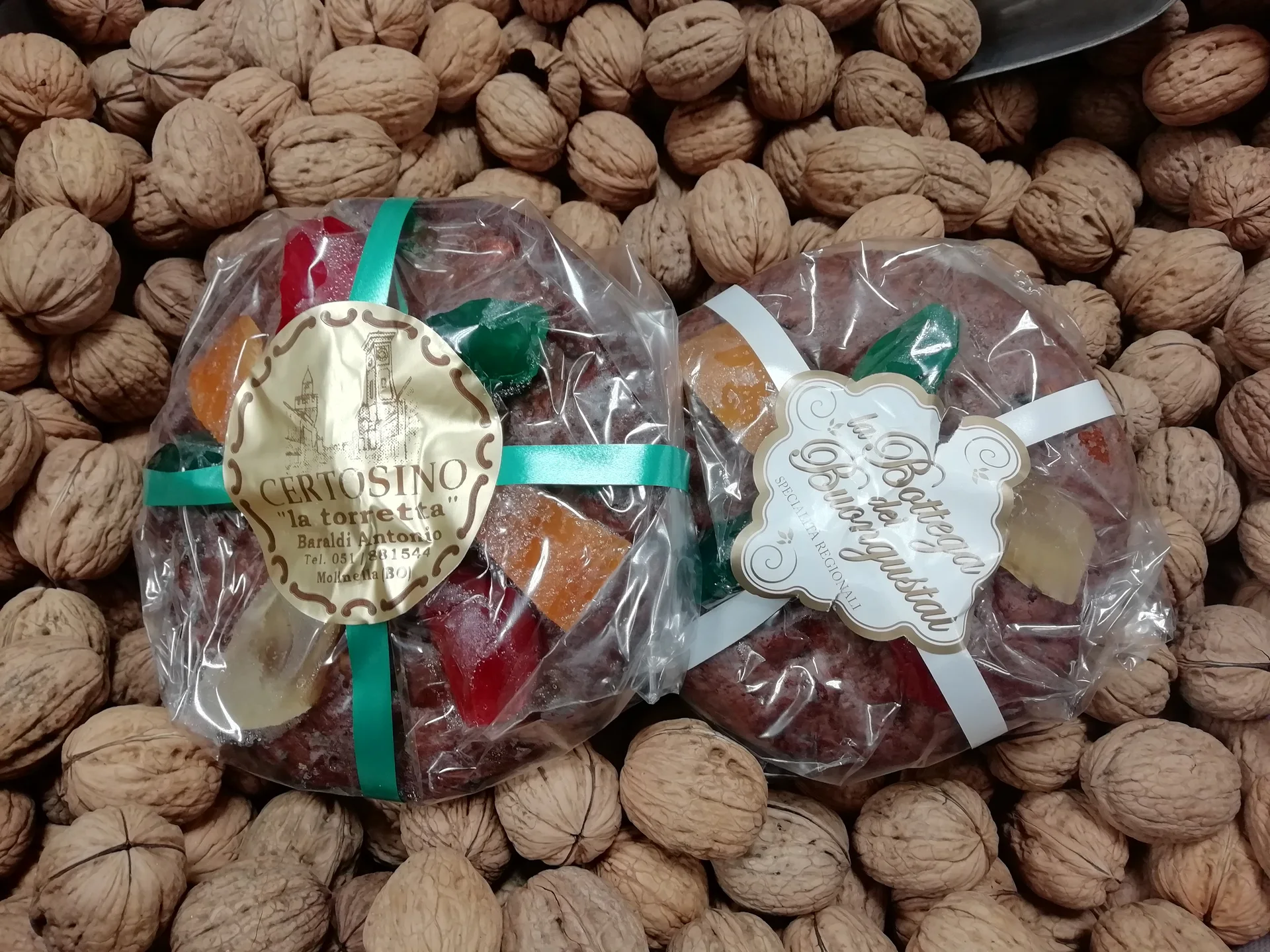
Bologna Certosino cake, photograph of the finished dessert. Photo: Patafisik · CC BY-SA 4.0 · WebP version resized from the original; display may crop the image.
Bologna · Dessert
Bologna Certosino cake
Honey, candied fruit, almonds, pine nuts and chocolate form a dense cake designed to rest and keep.
History and curiosities
Bologna Welcome presents it as a Christmas cake; the recipe was formalised by the Bologna delegation of the Italian Academy of Cuisine and deposited in 2001.
Essential ingredients
Flour, honey, cocoa, dark chocolate and cinnamon
Candied fruit, jam or mostarda, almonds and pine nuts
Wine syrup or Marsala and the raising agent listed in the recipe
Method at a glance
Warm the honey with some candied fruit and combine the ingredients into a dough.
Shape, decorate and leave to rest in a warm place.
Bake at a moderate temperature; brush with honey once cool and allow it to mature before eating.
Seasonality: A Christmas cake prepared in advance.
Place: Bologna. This page follows the city tourism source and does not replace the full recipe.
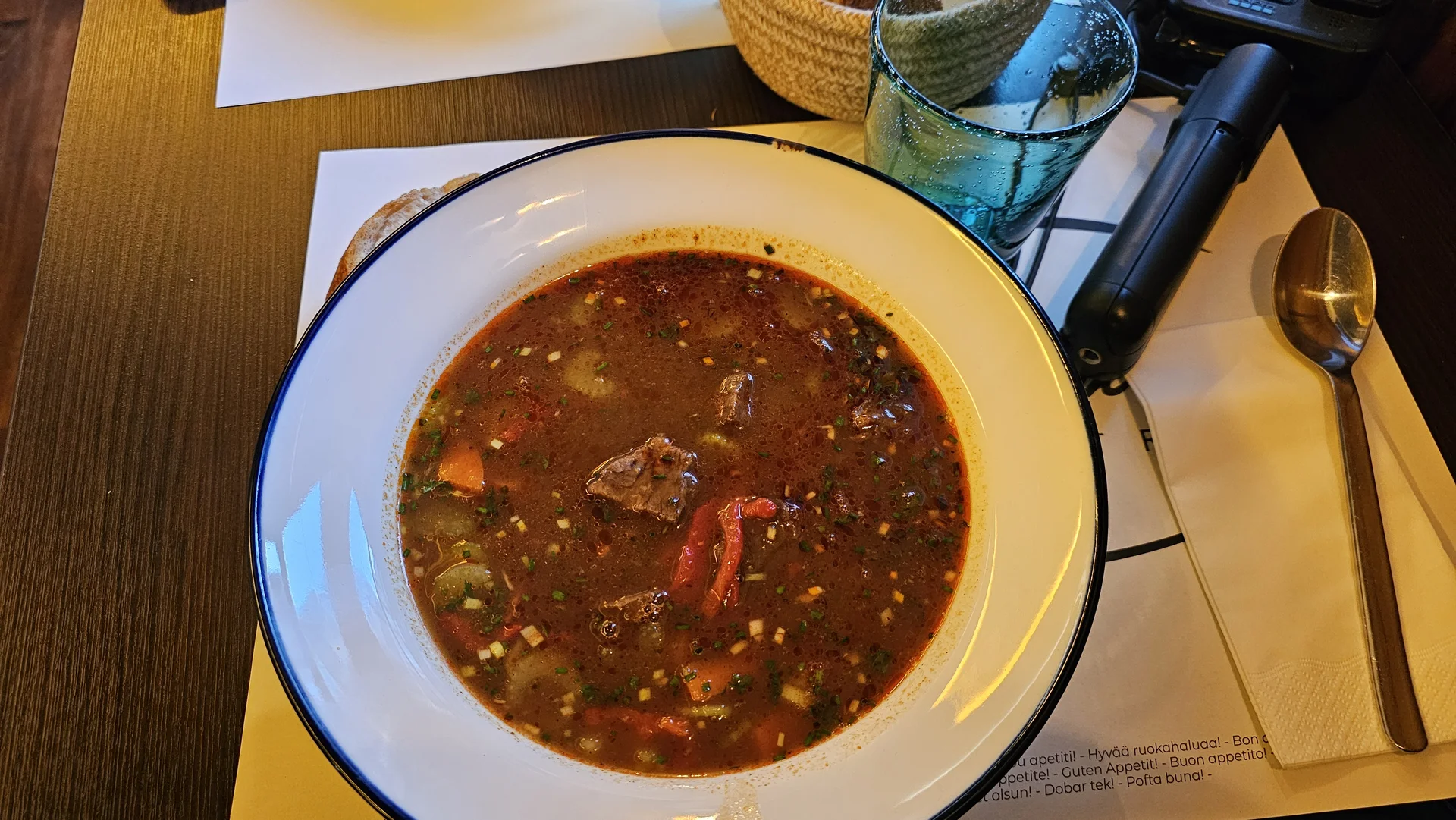
Gulyás photographed in Budapest. Photo: Asif Masimov · CC BY 3.0 · WebP version resized from the original; display may crop the image.
Budapest · First course
Gulyás, the herders’ soup
Meat, onion, paprika, peppers and potatoes: a substantial soup whose consistency varies across its many versions.
History and curiosities
Visit Hungary links the name to the gulyás cattle herders and describes the dish’s route from the puszta to the cities of the Austro-Hungarian monarchy.
Essential ingredients
Diced beef, onion and water
Hungarian paprika and green peppers
Potatoes; depending on the version, garlic, tomato, carrot and csipetke noodles
Method at a glance
Start the meat, onion and peppers with water; the source describes traditional cooking in a cauldron.
Cook at a controlled boil, adjusting salt and paprika as it cooks.
Add the potatoes later and finish when the liquid is even rather than separated from the fat.
Seasonality: Especially suited to colder months, but available year-round.
Place: A Hungarian tradition, also documented in its arrival in Buda and Pest. The photograph was taken in Budapest.
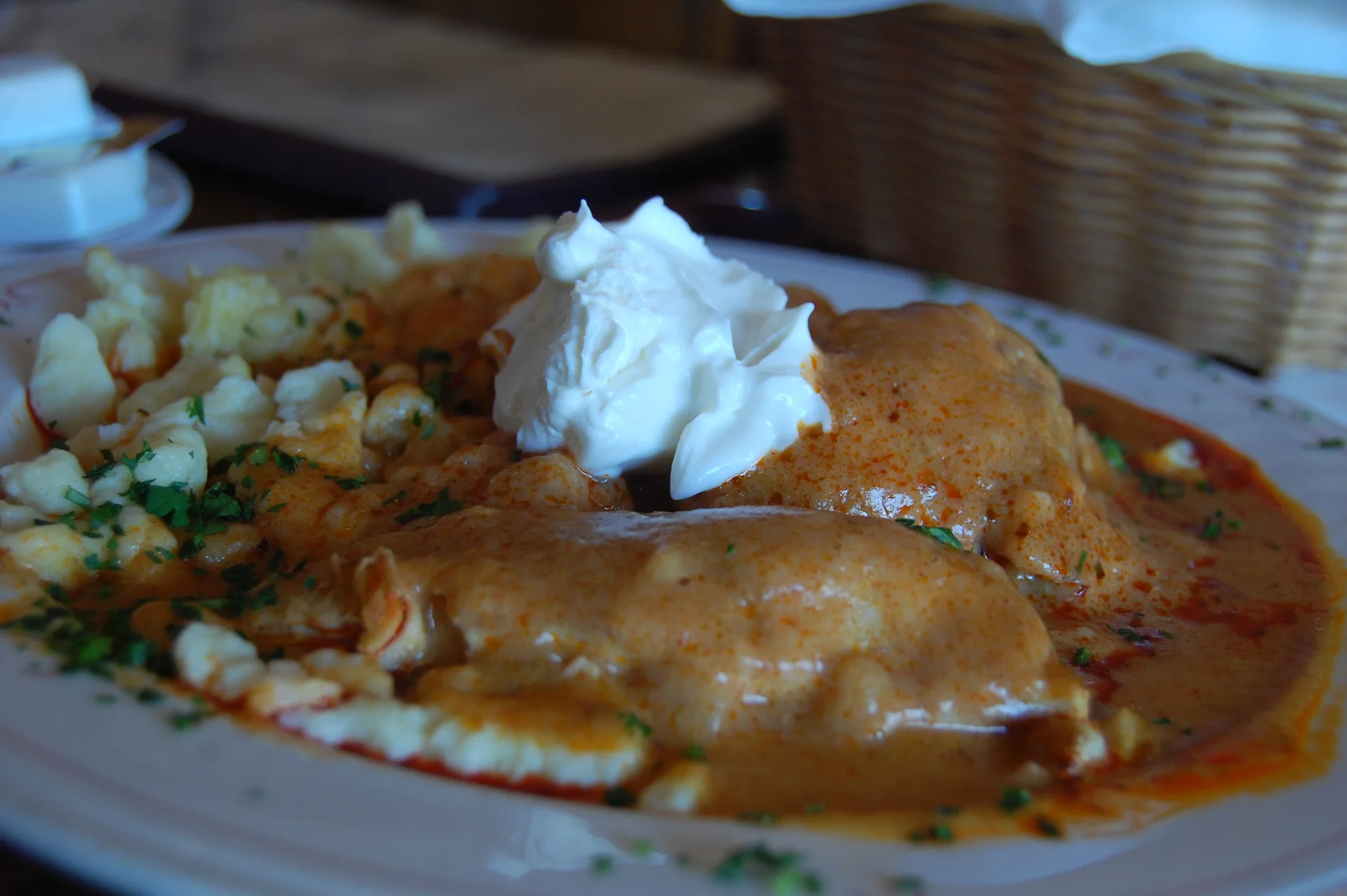
Chicken paprikash, an illustrative photograph of the dish. Photo: stu_spivack · CC BY-SA 2.0 · WebP version resized from the original; display may crop the image.
Budapest · Main course
Chicken paprikash
A main course built around its sauce: onion, paprika, aromatic vegetables and sour cream accompany gently cooked meat.
History and curiosities
Visit Hungary describes it as one of the most frequently cooked dishes in Hungarian homes and distinguishes paprikás from stew through its lighter use of paprika and the addition of sour cream.
Essential ingredients
Chicken, onions, garlic, green peppers and tomatoes
Hungarian paprika and pepper
Sour cream and a little flour for the traditional finish
Method at a glance
Build the onion base slowly and add the paprika without burning it.
Add the chicken and cook gently, moving the pan and replacing evaporated liquid.
Temper sour cream and flour with some cooking liquid, thicken and serve with small dumplings.
Seasonality: Year-round.
Place: A Hungarian home-style dish, not exclusive to Budapest. The photograph is illustrative and is not attributed to a city restaurant.
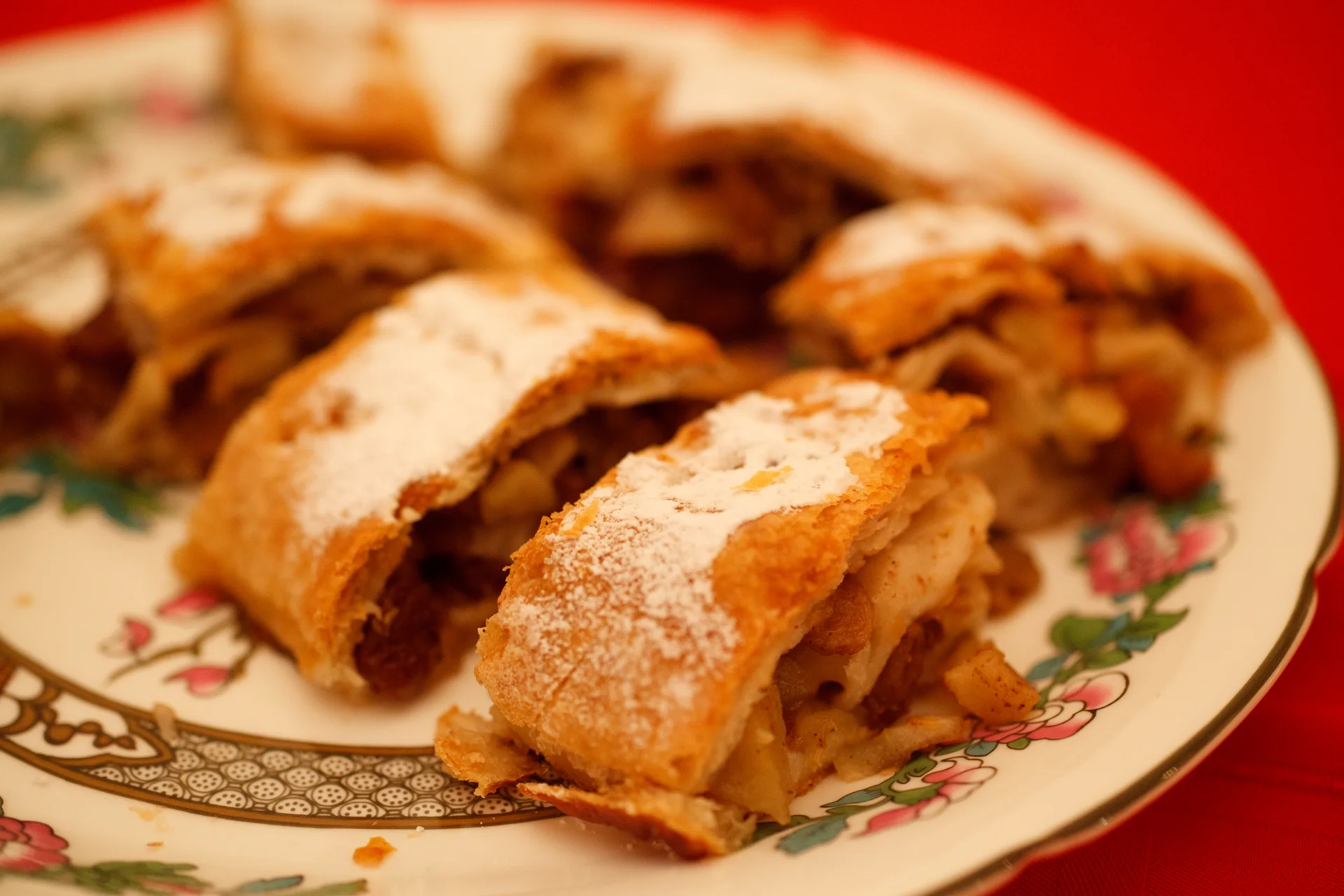
Apple strudel; illustrative photograph, not a Budapest venue. Photo: Tom Page · CC BY-SA 2.0 · WebP version resized from the original; display may crop the image.
Budapest · Dessert
Apple rétes
A very thin, crisp pastry with many possible fillings; apple is an editorial choice, not the only version.
History and curiosities
Visit Hungary lists apple, sour cherry, poppy seed and sweet curd among common fillings. A Hungarian government publication documents the traditional handling of hand-stretched dough.
Essential ingredients
High-gluten flour, lukewarm water, salt, egg and fat
A few drops of vinegar or lemon to support elasticity
Apple filling; sour cherry, poppy seed or sweet curd are also possible
Method at a glance
Knead until elastic, coat with fat and allow to rest.
Stretch the dough very thinly over a cloth and distribute the filling.
Roll using the cloth, brush and bake until crisp and golden.
Seasonality: Year-round; the apple version is especially suited to autumn.
Place: A Hungarian tradition with Central European connections; it is not presented as an invention exclusive to Budapest.
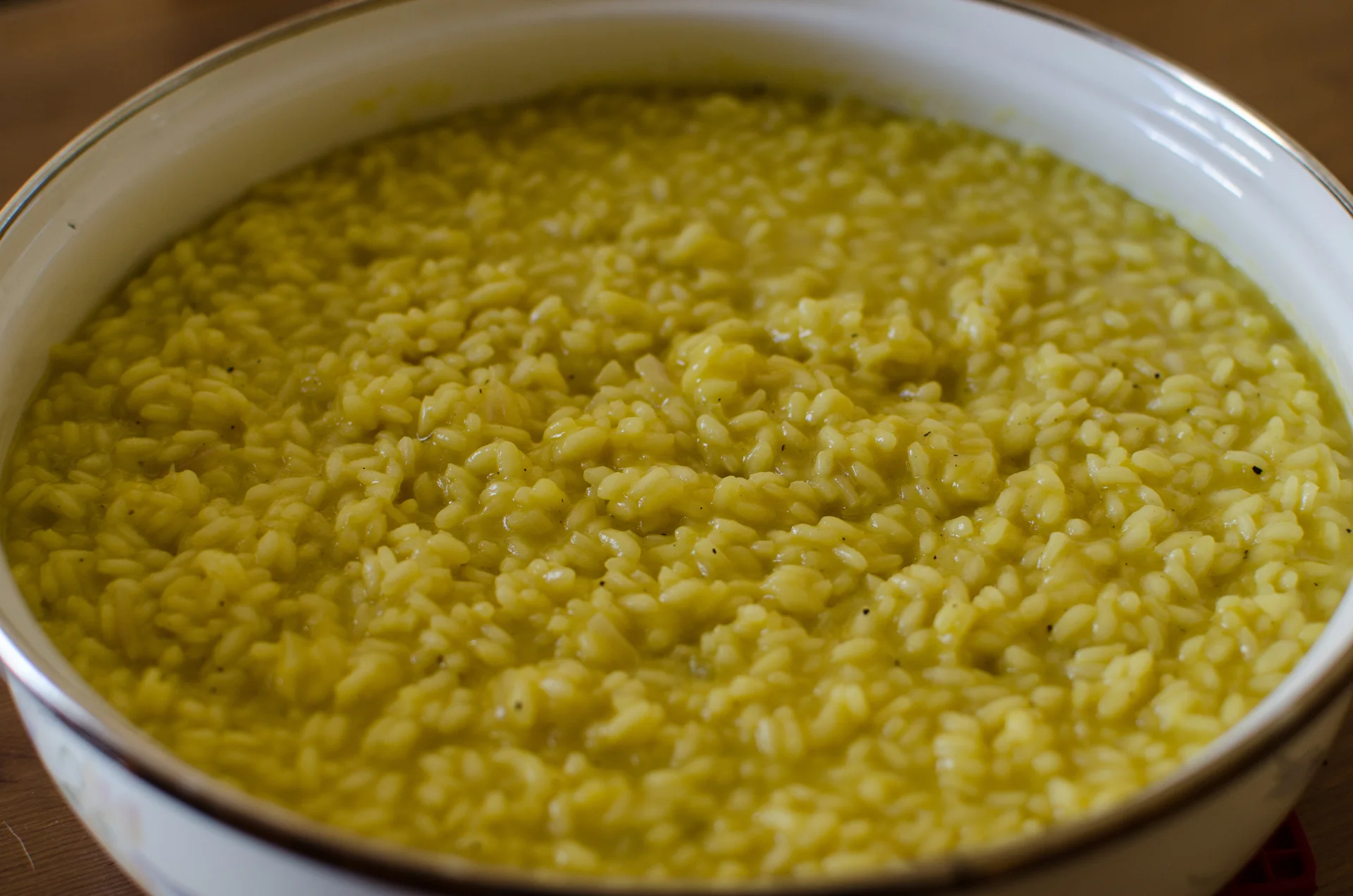
Risotto alla Milanese, photograph of the dish. Photo: Michele Ursino · CC BY-SA 2.0 · WebP version resized from the original; display may crop the image.
Milan · First course
Risotto alla Milanese
Rice, stock, butter, saffron and a vigorous finish: the result should remain soft and flowing, “all’onda”.
History and curiosities
YesMilano presents the tale of a painter adding saffron in 1574 as a city tradition, not a proven historical origin.
Essential ingredients
Carnaroli, Arborio or Vialone Nano rice
Meat stock, onion, butter and, in the published recipe, marrow and roasting juices
Saffron and grated Grana cheese
Method at a glance
Gently brown the onion in the fats, then add and toast the rice.
Deglaze and cook, adding hot stock gradually.
Add saffron at the appropriate stage for the form used, then finish off the heat with butter and cheese.
Seasonality: Year-round.
Place: Milan. Variations and the origin tale are kept distinct from the core recipe.
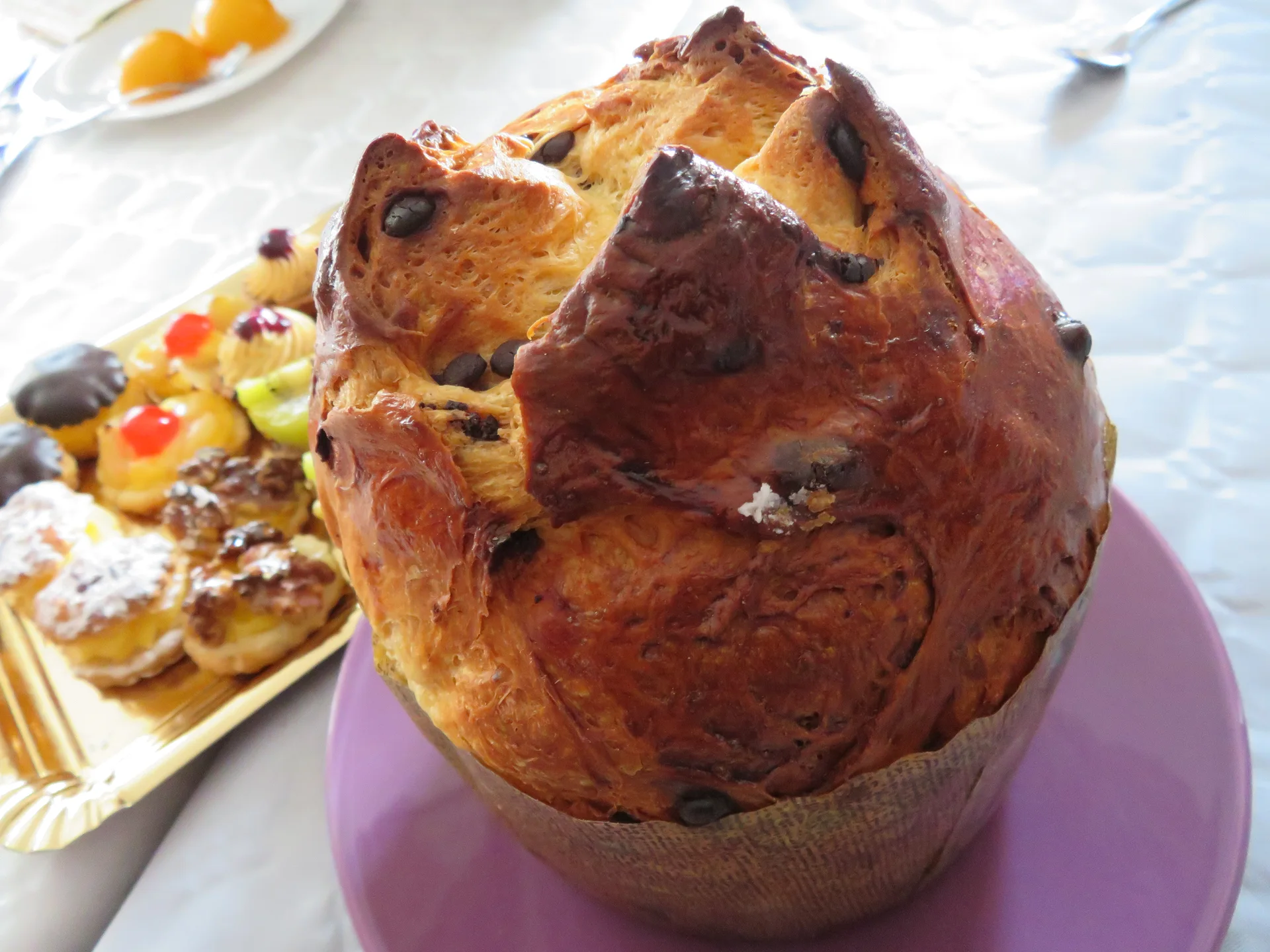
Italian panettone; illustrative photograph of the cake. Photo: Juan Emilio Prades Bel · CC BY 4.0 · WebP version resized from the original; display may crop the image.
Milan · Dessert
Milanese panettone
A tall enriched bread with butter, eggs, raisins and candied peel, built through repeated mixing and long rests.
History and curiosities
YesMilano separates legends such as “Toni’s bread” from the interpretation connected to Milan’s old Christmas bread.
Essential ingredients
Flour, bread dough, butter, sugar and salt
Egg yolks and whole eggs
Raisins, candied orange and citron
Method at a glance
Refresh the leavened dough several times with flour and successive rests.
Work in eggs, sugar and butter, then raisins and candied peel, until elastic.
Place in moulds, leave to rise for an extended period, score and bake while adjusting the temperature.
Seasonality: Christmas and the winter season.
Place: Milan, now with international reach. The photograph shows the cake and does not certify its origin or producer.
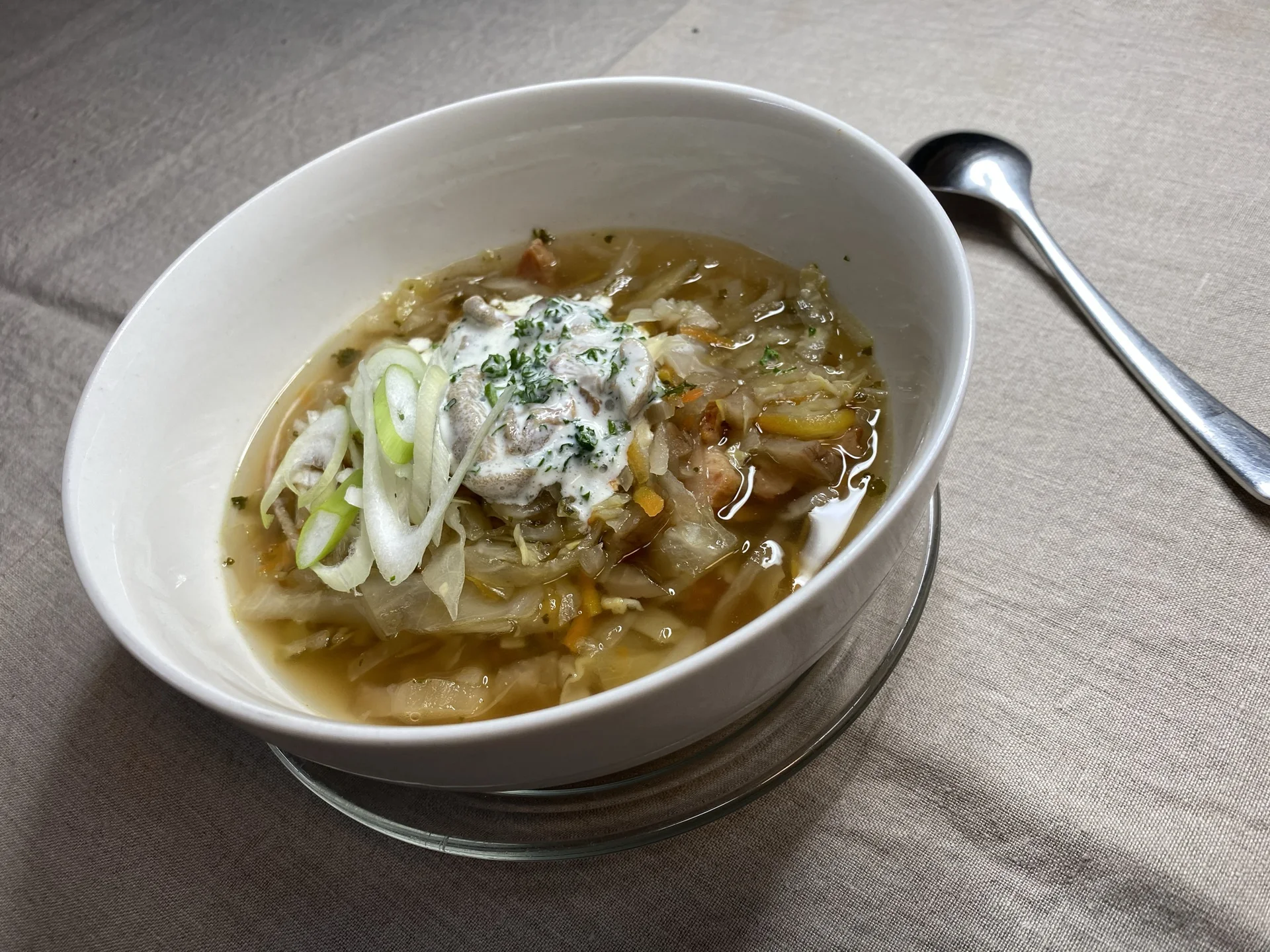
A shchi variation; illustrative photograph not taken in Moscow. Photo: Ostolob · CC0 1.0 · WebP version resized from the original; display may crop the image.
Moscow · First course
Shchi cabbage soup
Fresh or fermented cabbage, an acidic element and a broth that may use meat, fish, mushrooms or vegetables.
History and curiosities
Culture.ru documents the many versions and the covered resting period, including “one-day” shchi. It is not a dish exclusive to Moscow.
Essential ingredients
Fresh or fermented cabbage and an acidic element
Meat, mushroom, fish or vegetable broth
Aromatic roots, onion and spices; potatoes if used
Method at a glance
Prepare the broth with aromatic roots and onion.
Add vegetables and the acidic element; the source notes that fermented cabbage may be cooked separately.
Add spices near the end and leave covered to rest.
Seasonality: Warm versions in colder months; variants change with available ingredients.
Place: A Russian tradition told from Moscow; no claim of city exclusivity is made.
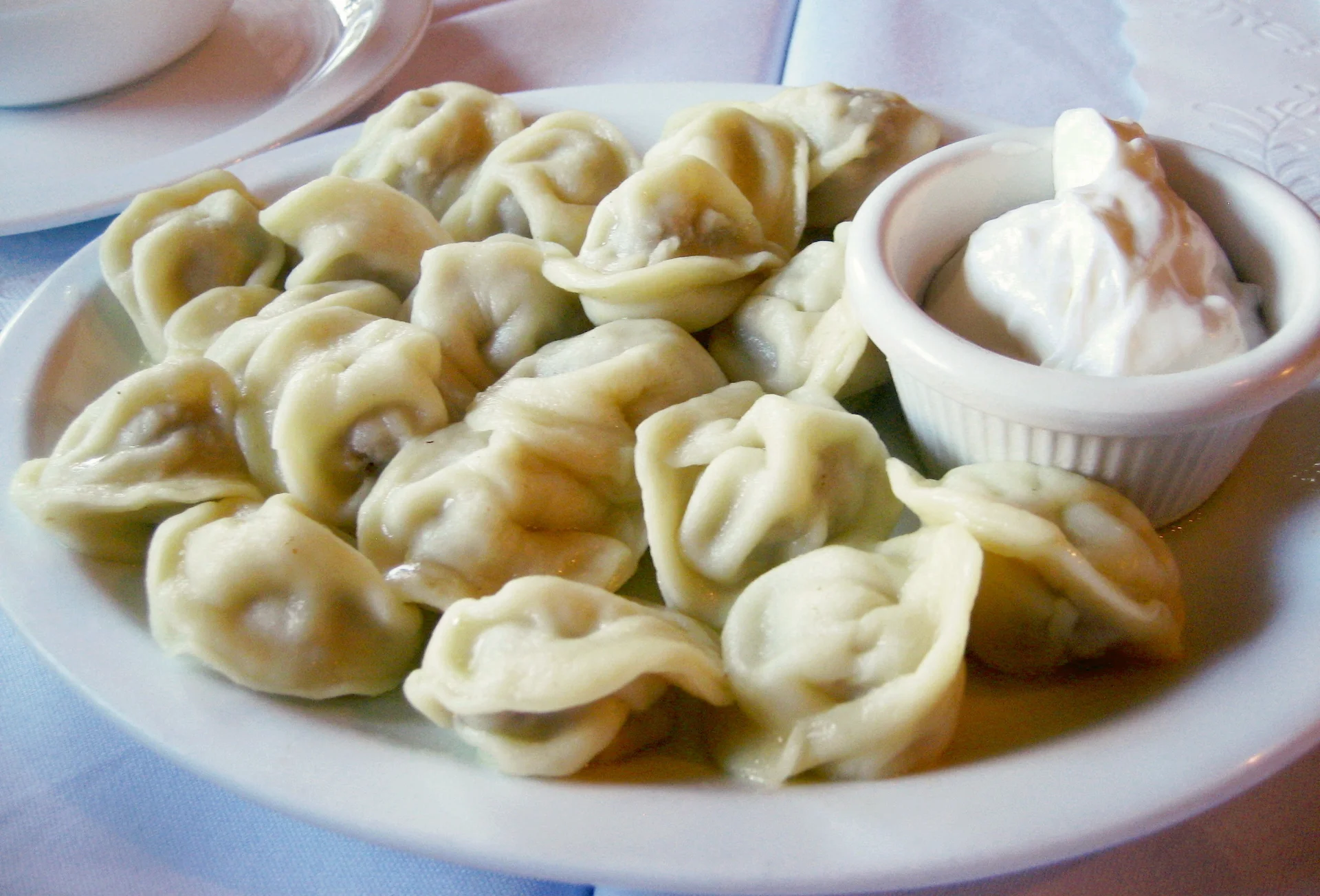
Russian pelmeni; illustrative photograph, not attributed to a Moscow venue. Photo: Eugene Kim · CC BY 2.0 · WebP version resized from the original; display may crop the image.
Moscow · Main course
Pelmeni
Small meat-filled dumplings, boiled or steamed and found in many Russian variations.
History and curiosities
The Cultura.ru source connects pelmeni with the Urals tradition. Their presence in Moscow does not change that regional origin.
Essential ingredients
Flour, egg, cold water and a little oil
Minced meat, onion and garlic
Parsley and spices
Method at a glance
Prepare an elastic dough and leave it covered to rest.
Season the meat with onion, garlic, parsley and spices.
Roll, cut, fill and seal; boil or steam.
Seasonality: Year-round; suitable for freezing.
Place: A Russian tradition of Ural origin, included to describe food culture found in Moscow without assigning it a Moscow origin.
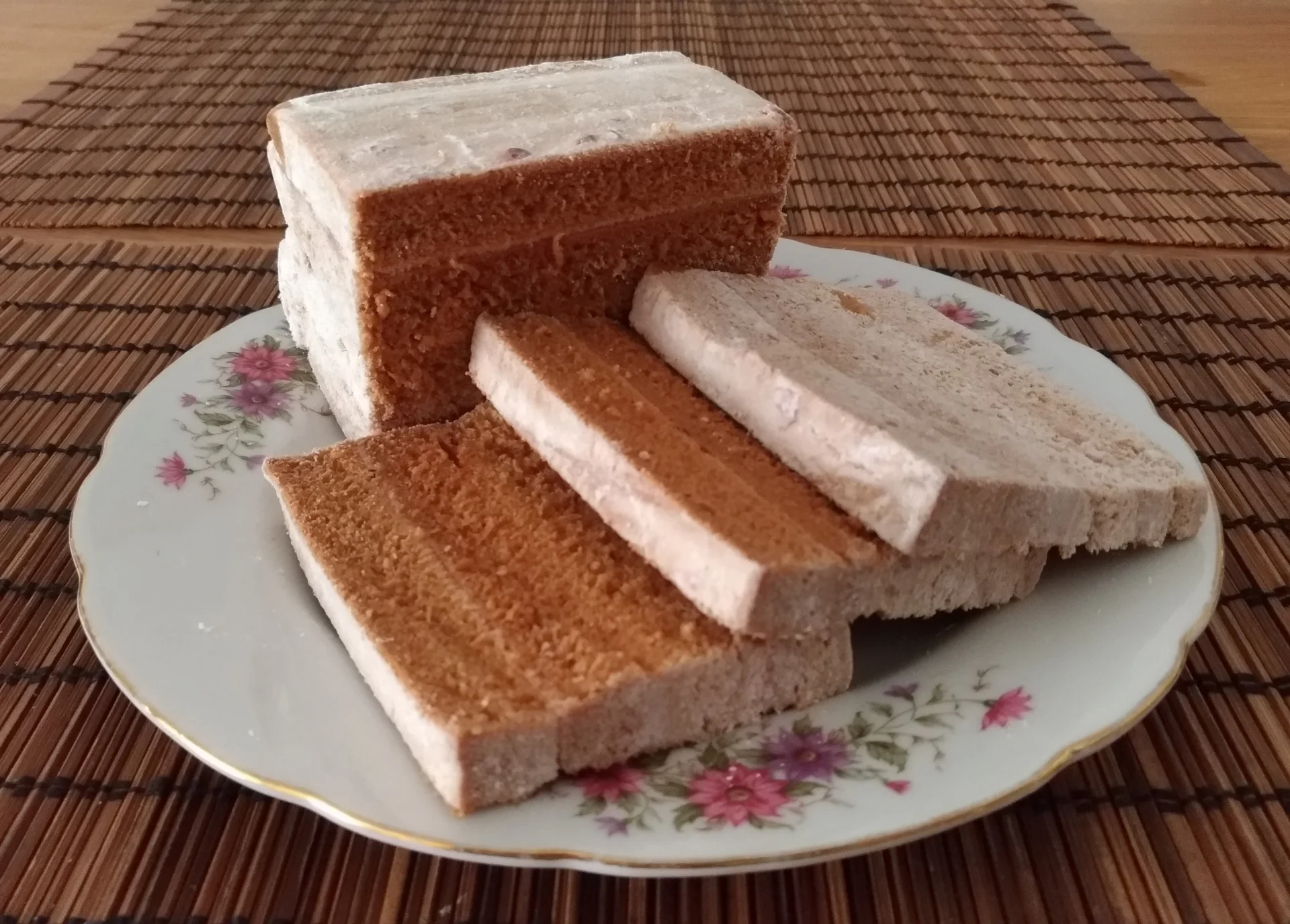
Belyov pastila; it documents a Russian regional version, not a Moscow product. Photo: Off-shell · CC BY-SA 4.0 · WebP version resized from the original; display may crop the image.
Moscow · Dessert
Apple pastila
Tart apple purée, sugar or honey and slow drying: a method also developed to preserve the harvest.
History and curiosities
Culture.ru documents historical recipes and the connection with Kolomna. It is a Russian tradition linked to the Moscow region, not an invention of central Moscow.
Essential ingredients
Tart apples
Sugar or honey
Egg white in the lighter variation
Method at a glance
Bake the apples, remove skin and cores, then purée.
Beat thoroughly with sugar or honey; fold in whipped egg white for the lighter version.
Spread out and dry slowly at a low temperature.
Seasonality: Connected with the apple harvest; it keeps and is eaten throughout the year.
Place: Kolomna and other Russian pastila traditions; the section links it to Moscow through an explicitly stated cultural and geographical proximity.
These summaries explain technique and context, but do not replace the full source recipe. Check allergens, storage, safe cooking and personal dietary needs.
PASSES · VISITS · TRANSPORT
Plan the rest of your visit.
Cards, visits and useful resources for the city you are reading about. Tiqets offers are identified separately from editorial links.
Some links are affiliate links. If you purchase through them, CityandBeyond.info may receive a commission at no additional cost to you. Prices and terms are set by the provider.
Follow the markets with a visit to the thermal pools in City Park. Standard admission is for ages 14 and over. Check availability, inclusions and holiday hours before buying.
How to use it · requirements
Check availability for your date, language, inclusions and any age or accessibility requirements.
Before paying, read the redemption instructions, required reservations and change or cancellation terms on Tiqets.
Keep your voucher and contact the provider named in your booking for activation and support.
Compare the Standard pass with the places you want to visit in Milan. Check the provider’s listing for attractions, transport and reservations included in the available version.
How to use it · requirements
Check availability for your date, language, inclusions and any age or accessibility requirements.
Before paying, read the redemption instructions, required reservations and change or cancellation terms on Tiqets.
Keep your voucher and contact the provider named in your booking for activation and support.
Another pass option to compare for your Milan visit. The All-Inclusive name does not replace the list of inclusions: check duration, attractions and terms directly on Tiqets.
How to use it · requirements
Check availability for your date, language, inclusions and any age or accessibility requirements.
Before paying, read the redemption instructions, required reservations and change or cancellation terms on Tiqets.
Keep your voucher and contact the provider named in your booking for activation and support.
Easy and Plus include different services. Validity starts with the first on-site use and lasts up to 15 days, or until the included services are used up.
How to use it · requirements
Compare Easy and Plus on the official website.
Discover Bologna, Clock Tower and bike hire require reservations: follow the instructions received after purchase.
Each included service can be used once. Check closing days.
Open official website ↗Bologna Welcome · last editorial check 18/10/2026Affiliate link · Tiqets
Visit and tasting · not a city card
Clock Tower, art and tasting
An experience centred on the Clock Tower, art collections and a tasting. Check times, actual inclusions, accessibility and collection details on the Tiqets listing.
How to use it · requirements
Check availability for your date, language, inclusions and any age or accessibility requirements.
Before paying, read the redemption instructions, required reservations and change or cancellation terms on Tiqets.
Keep your voucher and contact the provider named in your booking for activation and support.
A guided visit to get your bearings in central Bologna. Before booking, check the guide’s language, duration, meeting point and availability for your chosen day.
How to use it · requirements
Check availability for your date, language, inclusions and any age or accessibility requirements.
Before paying, read the redemption instructions, required reservations and change or cancellation terms on Tiqets.
Keep your voucher and contact the provider named in your booking for activation and support.
Troika is a card for paying for urban transport, not a general museum or attraction pass. Check purchase points, fares and top-up methods on the transport portal.
How to use it · requirements
Buy from a point listed by the operator.
For remote top-ups, check how to write the balance to your card before use.
Purchases, payments, activation, cancellations and support are handled on the provider’s website under the terms of each offer. Check prices, availability, language and accessibility before booking. We do not promise City&Beyond exclusive discounts or availability. Terms · Privacy